

My caregiver origin story began with what felt like a random medical fluke.
I had two healthy pregnancies, two smooth births, and life was wonderfully chaotic with two young children. One night, after the usual bedtime routines, we tucked in our toddler and 7-month-old, believing we’d wake to another ordinary day. But the next morning, our world imploded.
Our son suffered a severe ischemic stroke overnight, leaving him with epilepsy, hemiplegia, and a future filled with uncertainty. I had no idea what was happening. In a room filled with doctors, nurse practitioners, and a social worker, they told us how serious the stroke was, but no one could say what came next, not beyond the next 72 hours. Desperate for clarity, I asked, “Should I be planning end-of-life care for my son?” A doctor responded, “I wish I had an answer. We just don’t know how his brain will respond. We have to wait and see, hour by hour.”
And so I waited—hour by hour, day by day, week by week, and now, year by year.
That moment changed my life forever. I realized this wasn’t going to be a sprint, it was a marathon. In the beginning, life became an hour-by-hour existence. Even now, there are times it still feels that way. I had always found comfort in planning for the future, but now my focus narrowed to the next immediate goal: breathing on his own, eating orally, sitting up, rolling over. Each milestone is a victory, a step toward rebuilding what had been suddenly and tragically taken.
Advocacy and resource counseling had been part of my professional life as a Registered Social Worker, but now they are personal. I leaned on my training in the beginning, but nothing prepared me for the emotional turbulence. I felt calmer when I had knowledge, so I threw myself into learning everything I could, including attending brain injury courses, joining parent groups, and absorbing as many details from doctors and therapists as possible.
But despite all this effort, I still didn’t have an answer to the biggest question: Why did this happen?
Not knowing why the stroke occurred has been the hardest part. I thought if I could understand the cause, I’d find some peace. But as days turned into weeks and weeks into years without answers, guilt crept in. I replayed every moment before the stroke, blaming myself for things I did (or didn’t do) fast enough. The guilt fueled my determination to become a superhuman caregiver, as if I could somehow make amends. But caring for an infant with complex medical needs while raising a toddler was overwhelming. Learning to manage NG tubes, giving subcutaneous injections twice a day, and navigating the labyrinth of pediatric rehabilitation felt like stepping into a demanding new job…one I never applied for and wasn’t prepared for.

Over the past seven years, this journey has changed many times, and it has changed me in profound ways. I discovered strength and resilience within myself and my family that I never knew existed. I learned that challenges, though painful, hold the potential for growth if we’re open to them. I now see that even in the darkest seasons, a small flicker of light can guide the way.
I learned that even in darkness, light is always there if you choose to see it.
As a caregiver, I celebrate the small wins. We have dance parties in the kitchen, on the driveway, and on the way to school. I laugh at myself more than ever and believe that most things are, in fact, figureoutable. The world told me my son’s prognosis was questionable, but I’ve witnessed him surpass expectations time and time again. He continues to achieve what professionals call remarkable.
I’ve also learned that a positive mindset doesn’t mean pretending everything is okay. It means accepting the hard moments, giving them space, and then realizing there is ALSO room for joy. Becoming a caregiver opened my eyes to the world’s inaccessibility, and it motivates me to advocate—for my child, for other families, and for a world that should be kinder and more inclusive.
What happened to my son isn’t the WHOLE story of our lives. It’s part of it, but it does not define us. I am still a mother, a wife, a business owner, and a clinician.
Caregiving is one part of who I am, but it is not all of me.
When I talk to other parents on similar journeys, I remind them that their needs matter too. Self-care isn’t selfish. It’s essential! We can’t pour from an empty cup. Accepting help can be difficult, especially when it’s not done the way we would do it, but it’s necessary. We have to learn to trust others and let go of perfectionism, even if it feels uncomfortable.
This journey has reshaped me to my core, but I am grateful for the lessons it’s brought. I’ve learned to celebrate every micro-win and appreciate the beauty in life’s messiness.
There is grief for the future I imagined, but there is also joy in the present. These emotions: grief, hope, and happiness, can coexist. And when they do, they create a life that is rich, complicated, and beautifully real.
About the Author
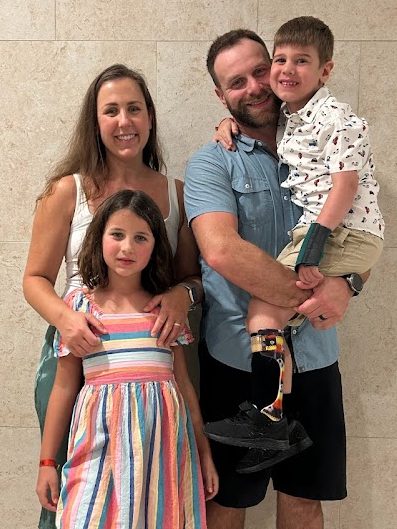
Jennifer Iannetta-Nunes is a mom, registered social worker, public speaker, advocate and author whose caregiving journey began when her son’s stroke left him with epilepsy, hemiplegia, and other medical needs. Drawing on her background in social work, she navigates the challenges of caregiving with resilience, celebrating small victories and embracing both joy and hardship. Passionate about advocacy and self-care, Jennifer encourages others to find strength in caring for themselves while caring for their children. She chronicles their journey with their son in her new memoir, Making it to Monday which is available for purchase from Amazon, Indigo and Barnes and Noble online.
