
The moment that changed everything wasn’t particularly loud.
Dr. Carolyn Foster was a third-year medical student, doing rounds on the pediatric complex care unit. A mother was speaking up, clearly, calmly, and urgently, trying her best to explain and convey something concerning her child’s health status. But the team wasn’t listening. At least not really. They nodded. Checked their boxes. Moved on. But Carolyn stood there in her white coat, watching, and felt something ignite.
“This is NOT how it should be.”
That moment never left her. It followed her into her pediatric residency, into her policy work, into every research study and family meeting that followed. It’s what fuels her now as a pediatrician, researcher, and director of the Stanley Manne Children’s Research Institute’s Health@Home Initiative at Ann & Robert H. Lurie Children’s Hospital of Chicago. It’s what led her to create the Foster Health Lab, where she and her team focus on redesigning pediatric care for children with medical complexity.
Carolyn is passionate about pushing to fix the gaps that families fall through. Not just on paper or in theory, but where it counts which is in the homes and lives of real families balancing the chaos and beauty of everyday medically complex caregiving. And through it all, she’s stayed grounded in one truth: the most important experts in the room are often the ones who don’t have the medical degrees.
“I tell students all the time: most of what I know about home care didn’t come from medical school. It came from the caregivers.”
“She taught me to protect and care for those who are different.”
Long before she ever picked up a stethoscope, Carolyn was learning from someone who understood what it meant to be dismissed and failed by the system. Her grandmother grew up in rural Illinois with a cleft lip and palate, shuffled between inadequate care and even time in an orphanage. That is, until one teacher intervened and got her to Chicago for treatment. That single act of compassion changed the course of her grandmother’s life.
“She would say that kindness changed her life. It shaped her sense of purpose, her self-worth. But she also never forgot what it felt like to be seen as different.”
Her grandmother didn’t just share memories, she passed down a legacy of service, compassion, and a deep responsibility to stand with those who are too often overlooked.
“She really instilled two things in me. One was the importance of service and giving back. The other was that we have a responsibility to protect and care for those who are different, whether that difference is a disability or something else.”
Those lessons stuck, and that legacy shaped how Carolyn moved through the world. It gave her a sharp instinct for recognizing injustice, a deep awareness of who wasn’t being heard or included, and a drive to do something about it.
“When I got to med school, I remember thinking, this can’t be how healthcare actually works. The whole system felt gravely incongruent with the lives of patients and their families.”
The disconnect was so stark that, for a time, Carolyn considered walking away from medicine altogether. But instead of leaving, she leaned in, finding herself especially drawn towards children with complex conditions, those with families whose needs were often last in line, overlooked, or misunderstood.
When she discovered the field of health services research and care design, something clicked. She realized she didn’t have to simply observe the gaps, she could work to close them.
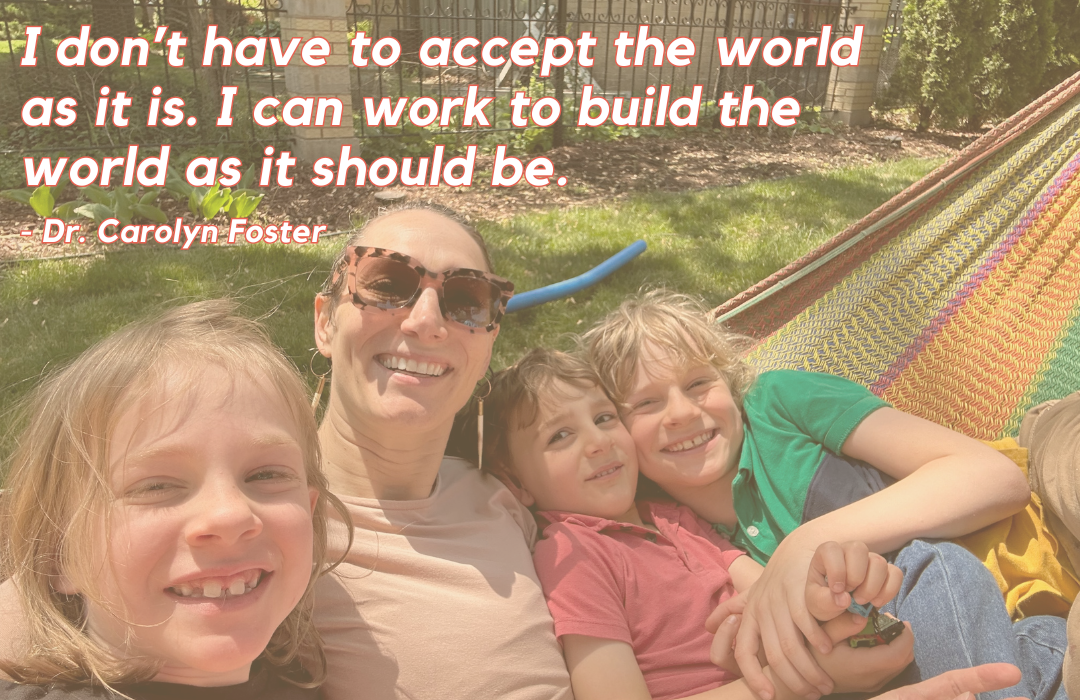
“I realized I don’t have to accept the world as it is. I can work to build the world as it should be.”
Carolyn doesn’t pretend that she arrived at her understanding of disability or ableism overnight. Like many professionals trained in traditional systems, she had to unlearn as much as she learned.
“At first, I didn’t even realize what I was fighting was ableism. I just knew something felt wrong.”
But over time, the patterns became impossible to ignore: policies that left families unsupported, systems that treated some children as more “deserving” than others, structures that left caregivers out of the conversation entirely. So she started doing the hard internal work by checking her own biases, learning the language, staying open to correction. Most of all, she started listening more carefully.
“My biggest fear is that I’ll spend a whole career in academia and not actually change the real world. So, when a parent says to me, ‘This is it! You get it,’ that’s what keeps me going.”
“If someone calls a parent ‘difficult,’ I say absolutely not!”
If there’s one message Carolyn wants to make loud and clear, it’s this: Caregivers are not ‘difficult,’ they are incredible.
She’s especially protective of families who are labeled negatively by professionals. Carolyn understands that when a parent pushes back, asks questions, or advocates hard, the problem isn’t the parent, it’s evidence of a system that asks too much and gives too little.
“I don’t get mad often. But if someone calls a parent ‘difficult,’ I’ll say absolutely not! This family has been up for days, or weeks or years just trying to hold it all together. The system needs to step up.”
At the heart of Carolyn’s work is a powerful belief: families should never have to justify their needs or carry the weight of broken systems on their own. The burden belongs to the system to step up, listen, and provide the support families deserve. She’s clear that real change means providers must do more than care; they must actively take part in transforming the way care is designed, delivered, and experienced.
“I want families to know that some of us – even many of us – know and care that the system is broken. That we see you and we want to partner with you to make it better. I wish there were more of us. But together, we can have a mighty impact.”
Carolyn’s work is rooted in partnership with families and with fellow changemakers. And together, they’re already making a difference.
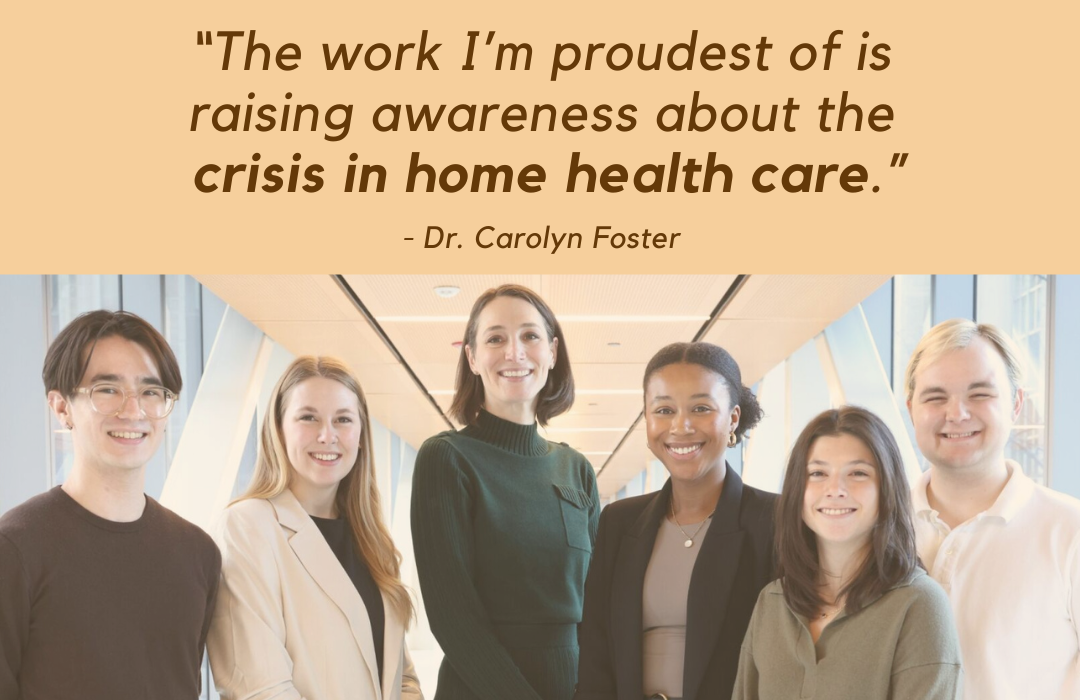
Through the Foster Health Lab and the Health@Home Initiative, she and her team are actively helping to ensure that quality health care can happen more meaningfully at home. Their work includes rethinking access to home health nursing, developing ways to better measure what caregivers actually value in care, and co-designing digital tools with families, not just for them.
“The work I’m proudest of is the work we’ve done to raise awareness about the crisis of low-quality and inaccessible home care.”
She’s also advocating for state-level changes in Illinois, like paid caregiving programs for family caregivers, in addition to pushing for health systems like her own to become more integrated, coherent, and responsive to what families actually need.
Her vision is bold and unapologetic:
“Every child with medical complexity has access to the full spectrum of care needed to live fully at home, in school, and at play. And their families shouldn’t have to sacrifice their health, income, or wellbeing to make that happen.”
Carolyn’s drive doesn’t come at the expense of the rest of her life. At home, she and her husband are raising three young children in the Chicago suburbs. Her days may be full of research, meetings, and mentoring students, but her evenings are reserved for what matters most, her family.
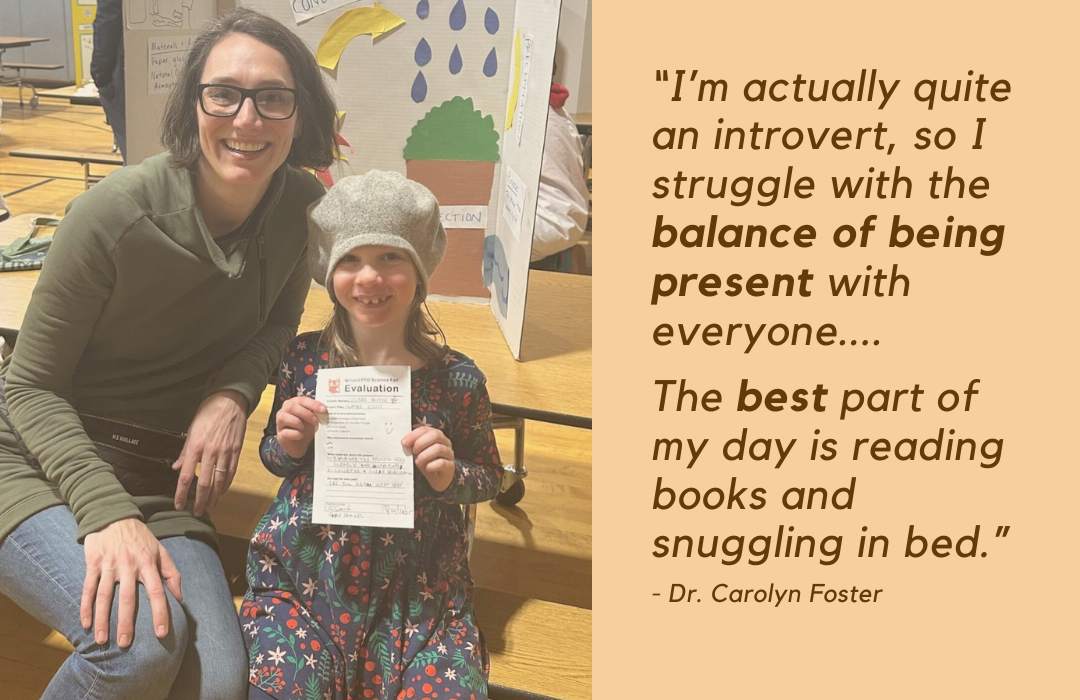
“I’m actually quite an introvert, so I struggle with the balance of being present with everyone. But I love doing Legos, drawing, and setting up trains with my kids. The best part of my day is reading books and snuggling with them in bed.”
In her personal life, she stays grounded through faith, community, and movement. Basketball, in particular, has remained a constant in her life. She plays weekly in their local women’s league, where she reconnects with the grit and joy of her younger self.
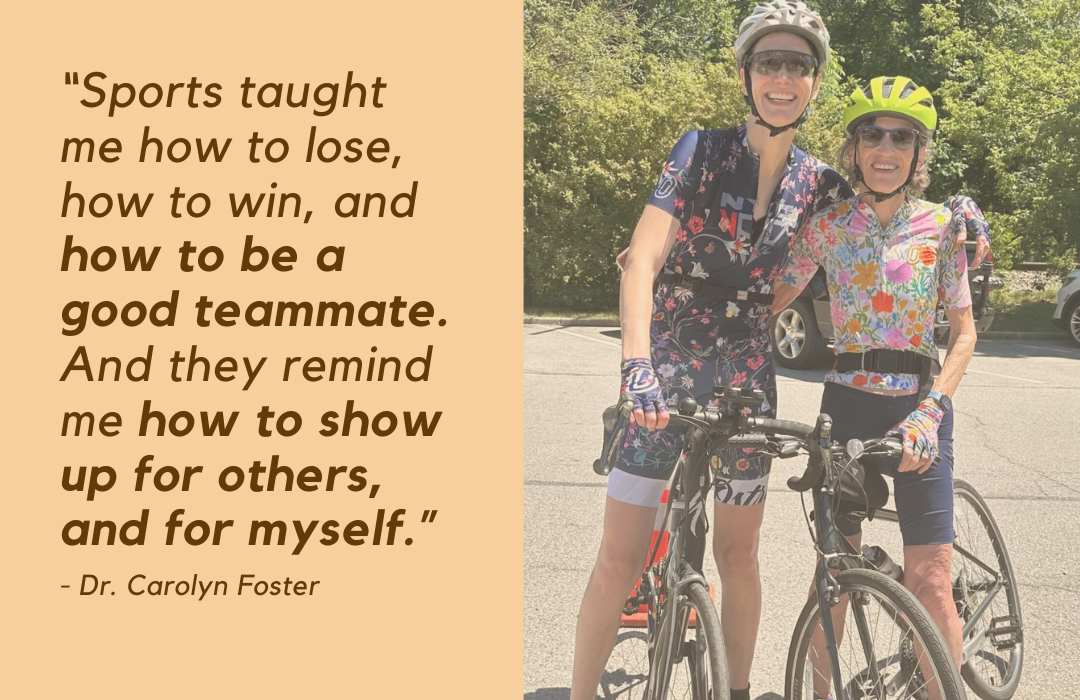
“Sports taught me how to lose, how to win, and how to be a good teammate. And they remind me how to show up for others, and for myself.”
On the weekends, she enjoys running, cycling, gardening, and art. What she appreciates most about these activities is that they anchor her to slower rhythms, quiet her mind, and remind her of life’s seasons.
“I like that gardening and art have a slower timescale than the rest of life. They ground me in the cycle of life.”
Her faith has been a steady thread, evolving through childhood and now practiced through an inclusive, justice-oriented spiritual community.
“Now that I’m in a mixed faith family, we remain connected to a faith grounded in the dignity and worth of all humans, services of others, and a loving community.”
Home is often the most important care setting, and yet, it is the least supported.
Carolyn’s commitment to meaningful, home-based care isn’t just reflected in her clinical practice, it’s backed by research, too. She recently co-authored a landmark article in American Academy of Pediatrics Journal titled Home Health Care Research for Children With Disability and Medical Complexity, which outlines how to advance systems of care that are both equitable and effective for families navigating complex home health needs.
This work reinforces what so many caregivers already know to be true: the home is often the most important care setting, and yet, it is the least supported. Carolyn and her colleagues make a powerful case for shifting funding, workforce training, and research priorities toward home health models that reflect the real needs and values of families.
It’s just one more example of how Carolyn continues to walk the walk, not only in advocating for change, but helping to build the evidence that supports it.
Shifting the System, Together
Dr. Carolyn Foster’s story is a powerful reminder that systems don’t shift on their own, people move them. And real movement starts with listening closely, questioning the status quo, and staying rooted in the belief that families deserve more than survival. They deserve care that is accessible, collaborative, and deeply meaningful. And real change requires more than good intentions. It requires providers who are willing to show up as true partners in building something better.
That’s why we’re proud to collaborate with Dr. Foster, Foster Health Lab, and the Health@Home Initiative. Together, we’re helping to shape research and innovation that reflect what families actually value so healthcare at home isn’t just more common, but more meaningful.
Want to help shape what comes next? Sign up for our emails to stay updated on caregiver-centered research, feedback sessions, and opportunities to get involved with projects like Foster Health Lab and Health@Home.
