
Not long ago, we asked our community to share if they’d ever experienced inappropriate comments and interactions with medical providers. We were expecting a few responses that we could shake our heads at together. While both of us at Caffeinated Caregivers have had firsthand experience of discrimination in healthcare settings, we still weren’t prepared for the response we received.
Hundreds of messages poured in. Some were short. Many were long. All of them were powerful.
And they shook us to our core.
These stories echoed a shared, painful truth: medical discrimination is real, and it’s happening far too often.
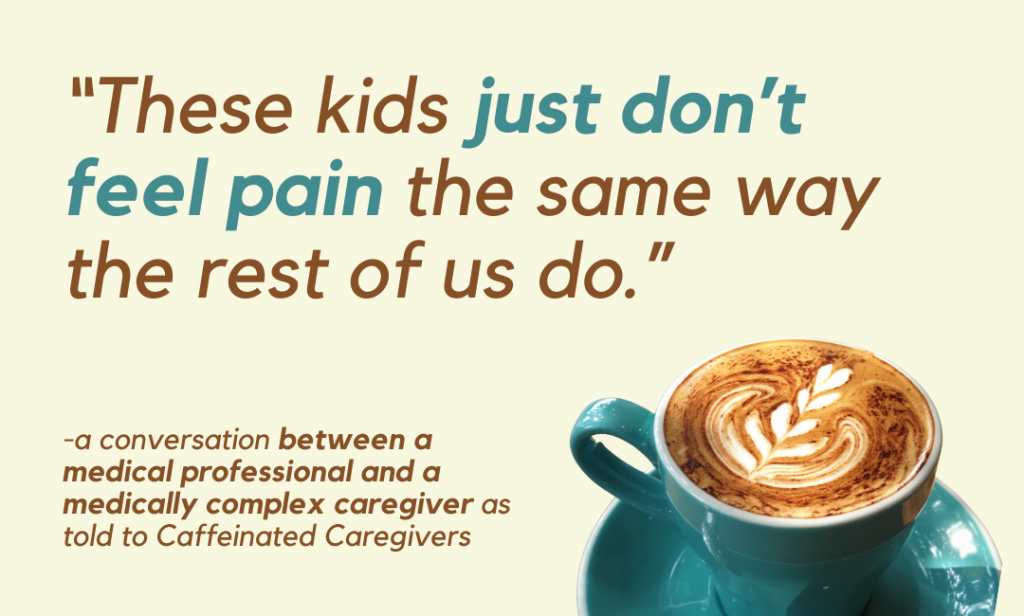
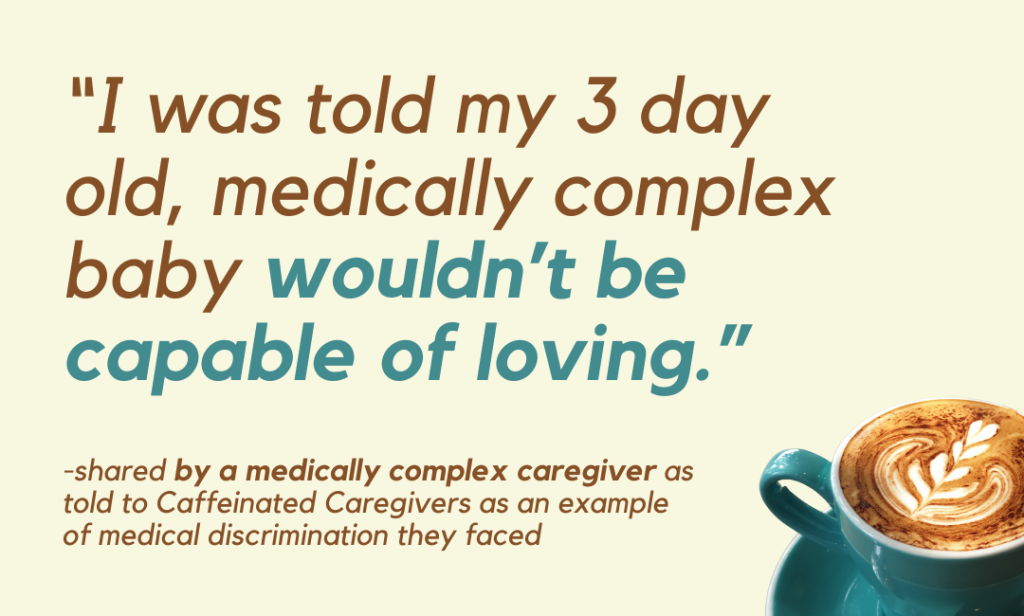
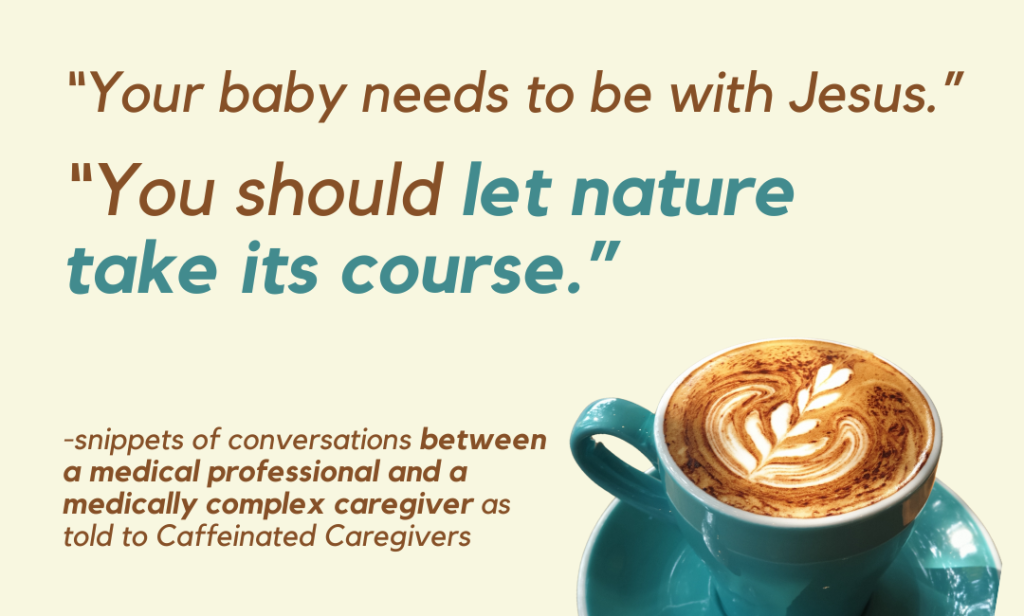
In story after story, caregivers recounted being dismissed, belittled, or treated like they were exaggerating or unstable. Some feared retaliation. Some cried in the parking lot. Many never went back.
Whether it was being disrespected in an emergency room, feeling talked over in a care team meeting, or being told “your child is too medically complex to provide treatment,” caregivers and people with disabilities are navigating a system that often fails to listen, believe, or respect them. So many of us have been made to feel small in moments when we most needed support.
And these weren’t rare or isolated events. They weren’t happening in just one part of the country. They happen everywhere. Different hospitals. Different states. Different people. But the patterns? The same.
And while our children are an obvious casualty, their parents and caregivers are not exempt from the harm that comes from discrimination from medical providers.
Research That Reflects Lived Experience
The stories shared with us are a part of a broader pattern validated by recent research, including powerful findings from Dr. Stephanie Ames. In a recent study titled, Impact of disability-based discrimination in healthcare on parents of children with medical complexity, Dr. Ames and her team dug deep into the experiences of caregivers who’ve faced discrimination in healthcare because of their child’s medical complexity. The stories from caregivers exhibited some common themes:
- Discrimination breaks trust. Caregivers described losing trust in doctors and hospitals after being dismissed, ignored, or treated unfairly. Many said they now go into every appointment on high alert, unsure of whether their child will be treated with the care and respect they deserve.
- It makes caregiving even harder. Discrimination means having to fight harder just to get basic care. Caregivers talked about spending hours emailing, calling, and searching for new providers after feeling failed by the system. The emotional labor of constantly advocating added to their already heavy load.
- It takes a toll on mental health. Many caregivers shared how these experiences left them feeling anxious, depressed, and full of guilt, wondering if they should’ve spoken up more or done something differently. It’s not just a bad moment, it’s a lingering pain.
- It’s even worse for families of color and those with Medicaid. The study also showed no that racism and poverty-based bias often made things worse. Caregivers said they were judged for their insurance, their race, or being a single parent, often leading to even more discrimination and disrespect.
This research confirms what so many caregivers have been saying for years: discrimination in healthcare is real, and it’s harmful, not only to the children facing discrimination, but also to those who care for them.
When Speaking Up Is Hard
While countless caregivers have faced discrimination against their children or families, many of us struggle to respond to discrimination in real time. Shock, exhaustion, and fear of retaliation or less accessible care make it difficult for caregivers to speak out in the moment.
But advocacy doesn’t have to be loud or aggressive. It doesn’t have to be perfect. And it can still happen even after the moment of discrimination has passed. After the initial encounter, caregivers often find their voice in different ways:
- Writing down what happened while it’s fresh in their minds
- Requesting a follow-up meeting with the provider or their supervisor
- Filing a formal complaint with the hospital’s patient advocacy office
- Switching providers if the relationship feels irreparable
- Bringing a trusted friend or family member to future appointments for support
- Preparing a brief script of concerns and needs for future appointments
Standing up as a caregiver doesn’t always require confrontation. It requires clarity about the respect, care, and recognition that both caregivers and their children deserve.
Find Your People. Find Your Power.
There is something deeply healing about caregivers realizing we are not the only ones facing discrimination in healthcare settings. When caregivers and disabled individuals connect, we don’t just share experiences – we share strategies: teaching each other the words to use, the questions to ask, and the boundaries to set.
And within the medical system, we can find powerful allies too: the nurse who validates our concerns, the specialist who addresses caregivers as equals, the patient advocate who recognizes us as experts in our own right. These allies don’t just provide better care, they help transform the system from within.
When we find these allies, whether professionals inside the system or fellow caregivers who stand beside them, we realize we’re not alone in the fight. We are part of a movement – one that’s gradually reshaping how the medical establishment sees and treats caregivers of children with medical complexity.
You Are Not Alone. And You Are Not Powerless.
When we share our stories of discrimination, what once felt isolating becomes collective. Our experiences validate others, help newer caregivers recognize discrimination, and create a visible record of the problems we all encounter. Medical discrimination may be a systemic issue, but every story shared, every letter sent, every community connection formed – it all pushes back.
If you’ve faced medical discrimination, know this: your voice matters. Whether you speak up in the moment or later, in a post, a letter, or a whisper to someone who gets it, you’re reclaiming your power.
And we’re right here with you. Always.
References
Ames, Stefanie G., et al. “Impact of Disability‐Based Discrimination in Healthcare on Parents of Children with Medical Complexity.” Developmental Medicine & Child Neurology, vol. 66, no. 9, Feb. 2024, pp. 1226–1233. https://doi.org/10.1111/dmcn.15870.
Ames, Stefanie G., et al. “Perceived Disability-Based Discrimination in Health Care for Children With Medical Complexity.” JAMA Network Open, 26 June 2023.
And community-rooted research via the Caffeinated Caregivers Instagram account compiled through responses collected both through story boxes and direct messages.
